“I, Darrin, Take This Witch, Samantha” (Pilot)
Season 1, Episode 1
Written by Sol Saks
Directed by William Asher
Produced by Danny Arnold
Original Air Date: September 17, 1964
“Once upon a time . . .
There was a typical American girl, who happened to bump into a typical American red-blooded American boy. And she bumped into him and bumped into him.
So, they decided they better sit down and talk this over before they had an accident.
They became good friends. They found they a lot interests in common:
Radio . . . television . . . trains!
And when the boy found the girl attractive, desirable, irresistible, he did what any red-blooded American boy would do: he asked her to marry him.
They had typical wedding, went on typical honeymoon in a typical bridal suite.
Except . . .
It so happens that this girl is a witch.”
[opening voiceover]
The very first episode of BEWITCHED opens with a charmingly old-fashioned voiceover that sweeps us through Samantha and Darrin’s whirlwind romance — how they met, fell in love and married — before dropping us right into their honeymoon suite. It’s a fairy tale setup, and it still works. Their meet cute happens in the revolving door of the Clark Building in Manhattan, which may or may not be a real structure, but it feels exactly like the kind of place where a 1960s Madison Avenue ad man and a beautiful stranger might collide.
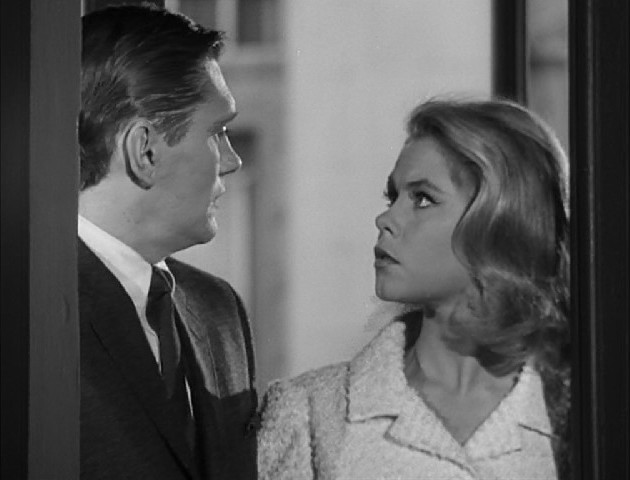
One of my favorite early moments is the look on Samantha’s face when she senses her mother is about to materialize in the honeymoon suite. It’s this perfect blend of dread and amusement, and Elizabeth Montgomery plays it with such lightness.
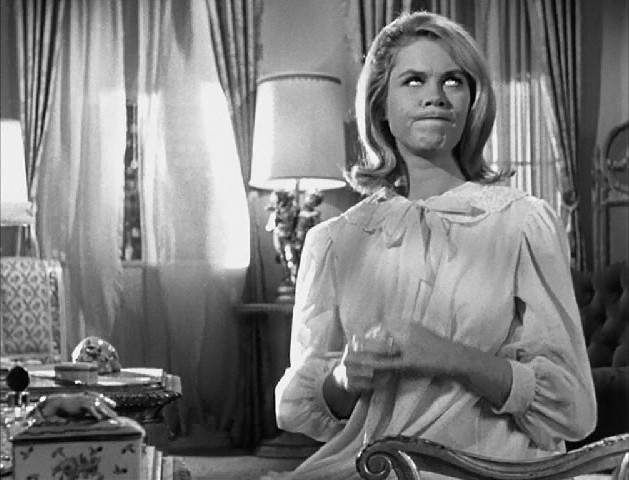
When Endora appears, Samantha tries to explain that her new husband is not a witch but a “normal, mortal human being.” In these early episodes they lean heavily on the phrase “human being,” which later gets streamlined to “mortal,” but here it still has that slightly formal, otherworldly ring.
Endora, of course, is horrified. She warns Samantha, “You don’t know what prejudice you’ll run into” living in Darrin’s world — which sets up the “outsider” theme that runs throughout the series, especially in the early seasons.
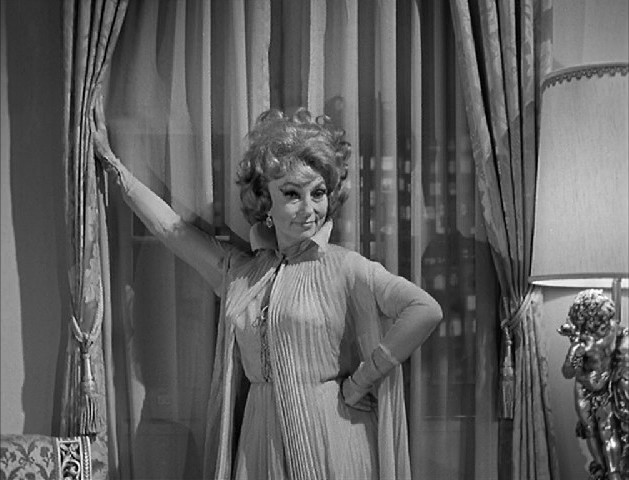
This episode also gives us the very first instance of one of Samantha’s understated catchphrases, “Good,” delivered right after Endora pops out of the room and Samantha steels herself to tell Darrin the truth. It’s such a tiny moment, but it sets up one of the show’s signature rhythms.
We also learn a few things about Darrin right away: he’s from Missouri, he’s an “advertising man” and he has an aunt who thinks she’s a lighthouse. When Samantha finally tells him she’s a witch, she tries to prove it with small gestures — lighting a lighter, moving an ashtray, opening a window. It’s only when she materializes drinks in his hands that he finally believes her.
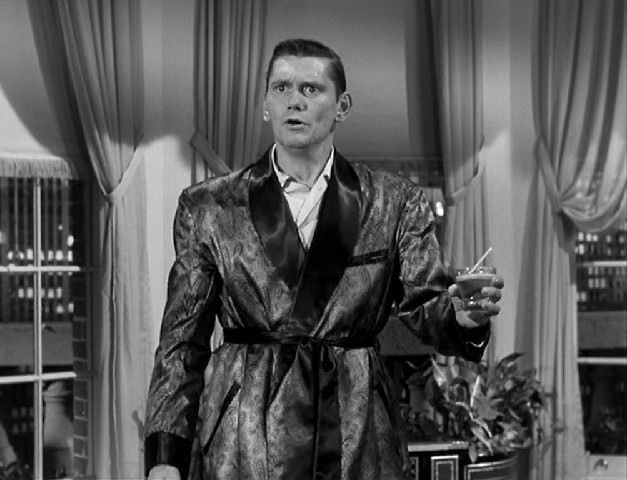
He says they need to discuss this . . . but only after the honeymoon activities resume. The show never hides the fact that Samantha and Darrin have a sexual relationship; there’s one bed in that hotel room, and the implication is clear what happens after the fade out.
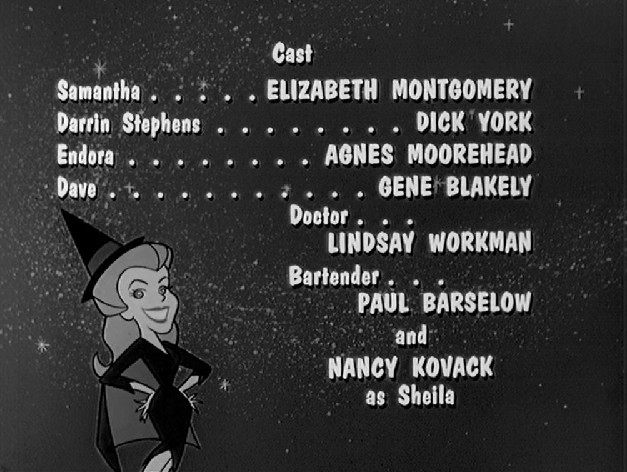
Darrin’s attempt to seek advice about his “predicament” is one of the funniest sequences in the episode. His friend Dave is having an entirely different conversation, the doctor cheerfully tells him, “Now that you’ve had your honeymoon, take a vacation” and the bartender tops it all with, “You should see my wife.” It’s a perfect little montage of male camaraderie, where no one actually listens to anyone else.
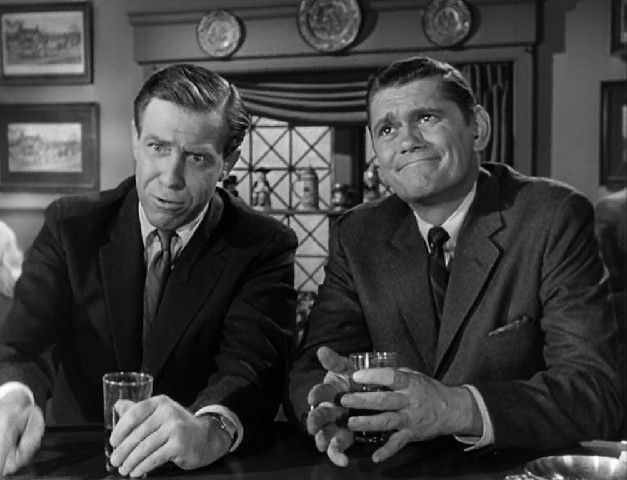
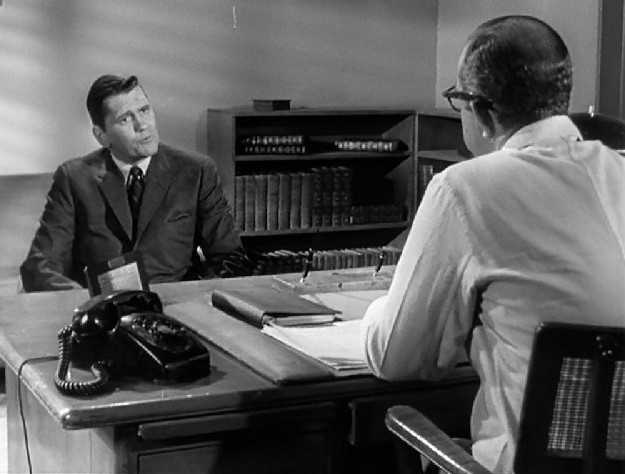
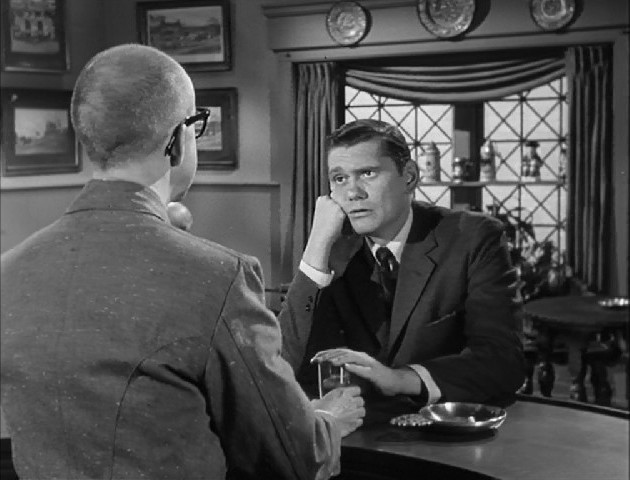
Back at what seems to be Darrin’s apartment, he finally admits he loves Samantha too much to give her up and lays out his vision of their future. And what a future! “You’re going to have to learn to be a suburban housewife,” he says, followed by the immortal, “You’ll have to learn to cook, keep house and go to my mother’s house for dinner every Friday night.” The irony, of course, is that when we eventually meet his parents in a later episode, they’re visiting from out of town — continuity was not exactly a priority in 1960s sitcoms. Samantha is on board and promises to try to live a “normal” life.
Elizabeth Montgomery looks radiant in this scene, with a hairstyle I don’t recall seeing in any other episode and wearing a sweater that feels like it might have come straight from her own closet.
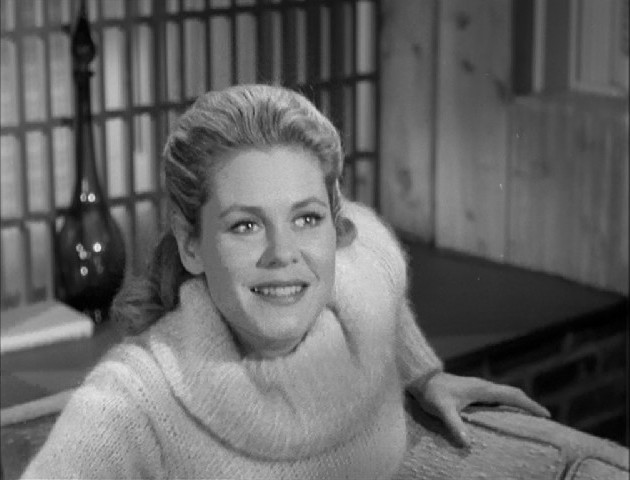
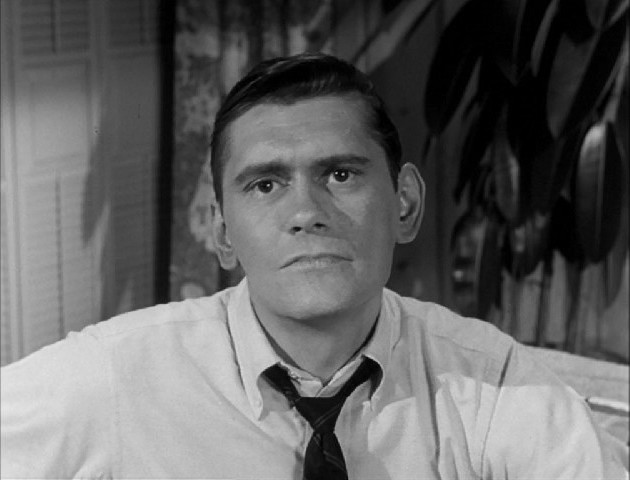
And this is also a moment where Dick York really shines. He brings such warmth and comic timing to Darrin — that mix of earnestness, bewilderment and genuine affection— that the entire premise becomes believable. Then Darrin breaks the fourth wall with, “So my wife’s a witch. Every man has to make some adjustment.” It’s a surprisingly modern moment of self-aware humor.
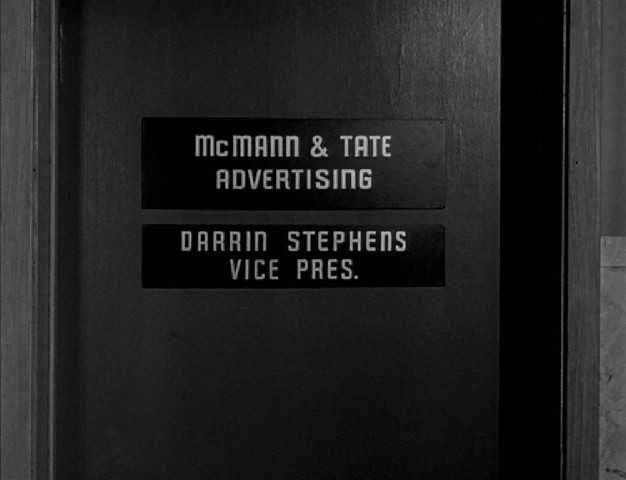
There’s also a funny little production oddity: the sign on Darrin’s office door identifies him as Vice President at McMann & Tate. In every future episode, he’s an Account Executive. Pilot episodes often have interesting details like that. The interior of the Brady house was completely different in the pilot than in all other episodes of THE BRADY BUNCH.
The episode’s final act introduces Sheila Sommers, Darrin’s former girlfriend, played with delicious snark by Nancy Kovack. Sheila invites the newlyweds to what she calls a “potluck … nothing fancy, sitting on the floor kind of thing,” which of course turns out to be a formal dinner designed to humiliate Samantha.
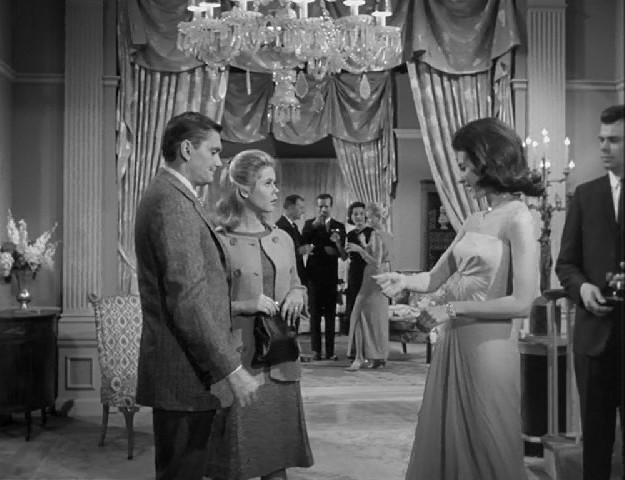
Sheila is such a nightmare (I was going to use another word that rhymes with “witch”) that it’s hard to imagine Darrin ever dating her, but her family’s wealth is obvious — she casually mentions opening up the house in East Hampton for a tennis match.
Sheila’s digs at Samantha are sharp and coded: offering to set her up with a dressmaker, recommending a stylist who works wonders with “hard to manage hair” and then the real kicker — asking if she’s been to a certain plastic surgeon known for “beautiful nose work.” It’s a subtle but unmistakable insinuation that Sheila sees Samantha as an “ethnic” outsider, someone not quite belonging in their WASP social circle. Given that Harry Ackerman, Sol Saks and Danny Arnold were all Jewish, the anti-Semitic undertone of the plastic surgery remark feels intentional.
The best part of the episode, though, is Samantha’s quiet, controlled revenge. When she’s finally had enough, she uses her witchcraft to turn the tables on Sheila: food stuck in her teeth, her elbow in the soup, the maid dropping a tray of food in her lap.
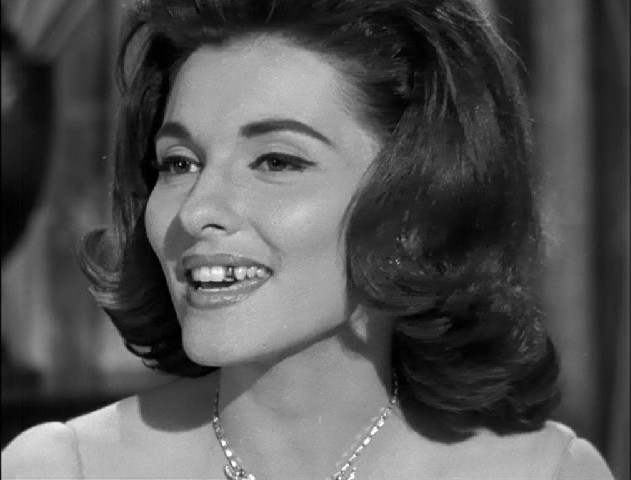
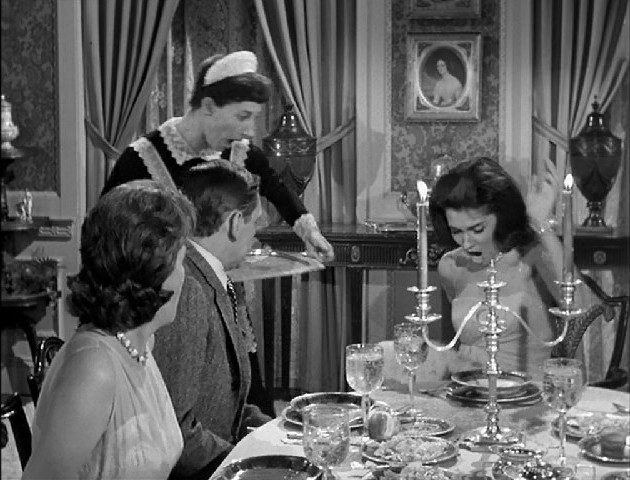
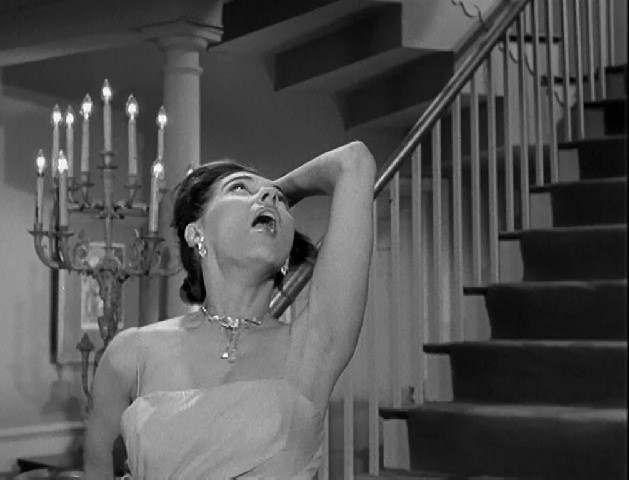
And then the pièce de résistance — a gust of wind that blows Sheila’s wig clean off. I laughed out loud when I re watched, even though I’ve seen this episode many times.
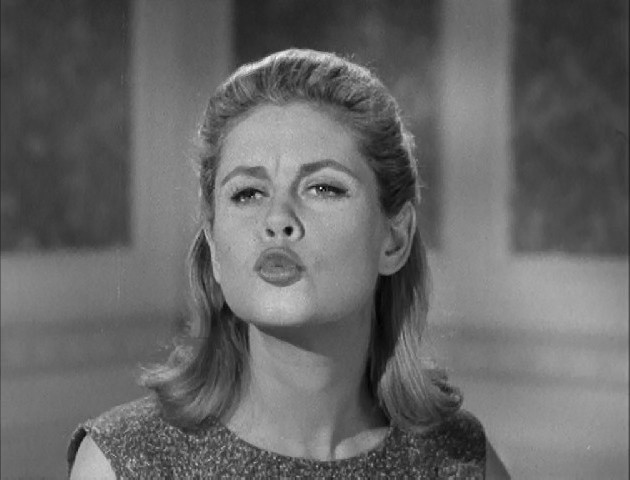
Samantha’s little air kiss to Darrin afterward is pure triumph.
As a pilot, “I, Darrin, Take This Witch, Samantha” sets the tone of the series beautifully: romantic, slyly progressive and anchored by Elizabeth Montgomery’s luminous presence. And with Dick York already so grounded and funny, the show arrives fully formed — a magical domestic comedy that still sparkles over sixty years later.
Fun fact:
The uncredited voiceover narration at the beginning of the episode was done by José Ferrer. Elizabeth Montgomery had asked her father, Robert Montgomery, to do it, but he declined. In later interviews, she said she believed he regretted turning it down.
 BEWITCHED & BeHOLDEN
Leave a comment